Inside the Walking Body
complete
Topic
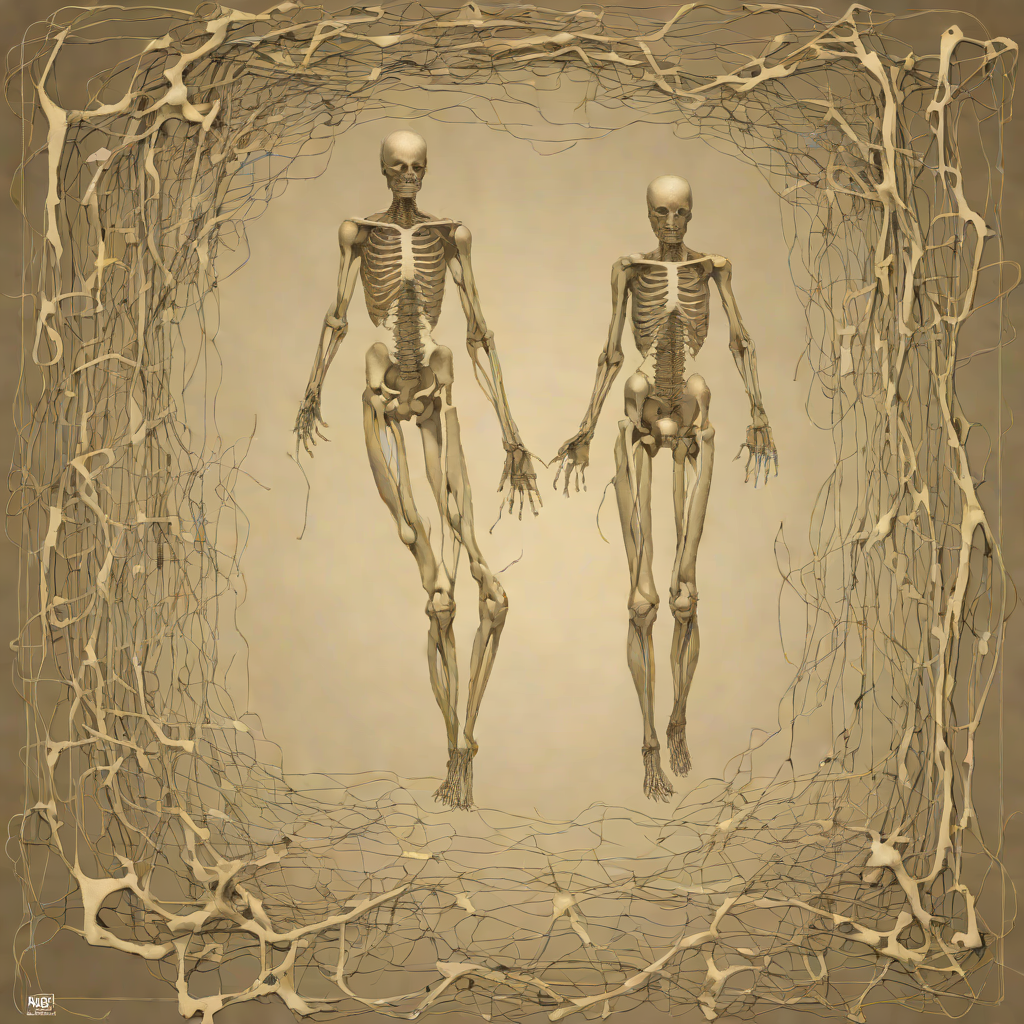
Talk about some of the biological things that go on inside a human during/after exercise (going for a couple hour long walk), specifically thinking about pondering these things in a meditative sense while walking
Audio
Generated Text
There is a particular kind of attention that becomes available during a long walk.

Not at the beginning, usually. At the beginning, the body is still negotiating with the idea. Shoes are being noticed. The air is being compared with the room you just left. The mind may still be carrying the shape of whatever came before: a conversation, a screen, a small worry, a list of things half-finished.

But after a while, if the walk is long enough and unhurried enough, something begins to settle into rhythm. The steps repeat. The arms find their natural swing. Breath stops being a thing you are doing and becomes a tide that is simply present. The path ahead keeps arriving, one piece at a time.

And inside, beneath all this ordinary motion, the body is doing an astonishing amount of quiet work.

A walk may look simple from the outside. A person moving through space at a moderate pace. But internally, it is a coordinated event of almost unreasonable complexity. Muscles contracting and relaxing. Blood vessels widening in some places and narrowing in others. The heart adjusting beat by beat. Lungs exchanging gases with the air. The liver releasing stored fuel. Fat cells participating slowly. Hormones rising and falling. Immune cells shifting their behavior. The brain changing its chemistry and its patterns of attention.

And none of this needs to be commanded.

It is interesting to consider that, while you are walking, you are not really moving yourself in the way you might imagine. You are not issuing thousands of precise instructions to every muscle fiber. You are not consciously calculating balance, force, oxygen delivery, glucose demand, temperature regulation, and joint angle. You form an intention—walk this way, continue, turn here—and then an ancient, layered intelligence takes over much of the detail.

The body walks you.

At first, during the early minutes, there is a kind of metabolic transition. If you have been sitting, your body has been operating in a quieter mode. Muscles at rest use energy, of course, but modestly. The heart does not need to send large volumes of blood to the legs. Breathing can remain shallow. Blood flow can favor digestion, maintenance, the background chores of being alive.

Then you begin to move.

The muscles of the calves, thighs, hips, and back ask for more energy. Their demand is immediate. Stored ATP—the direct energy currency of the cell—is used within seconds. But there is only a tiny amount of it waiting inside muscle cells. So the body begins regenerating it through several pathways, as if opening different doors in a familiar house.

For very brief efforts, the phosphocreatine system helps replenish ATP quickly. But in walking, especially a long walk, the body soon leans into aerobic metabolism. Oxygen becomes central. Glucose and fatty acids are broken down in the mitochondria, those small, often-mentioned structures inside cells that are both ordinary and almost mythic. They take fragments of food and, through a sequence of chemical handoffs, turn them into usable cellular energy.

One can walk for years knowing none of this. But if you do know it, the knowledge can add a strange tenderness to the act. With every step, trillions of mitochondria are participating. Not dramatically. Not as a spectacle. Just with the small steady patience of furnaces in winter.

The heart notices quickly.

It does not wait for a formal announcement. Signals arrive from the nervous system, from the muscles, from changes in carbon dioxide and acidity in the blood. Heart rate rises. Stroke volume—the amount of blood pushed out with each beat—also increases. More blood travels toward working muscles. Blood vessels in those muscles dilate, opening wider, letting more flow pass through. Elsewhere, some vessels constrict a little, redirecting supply.

This redistribution is not crude. It is not simply “more blood everywhere.” The body is always making local decisions. In the active muscles, chemical signals such as nitric oxide help relax the smooth muscle in vessel walls. Carbon dioxide, heat, and byproducts of metabolism also encourage blood flow. In a sense, the muscles speak to the blood vessels by altering their immediate environment. They say, in chemistry rather than words, more here, please.

The heart responds.

If you place attention gently on your pulse during a walk, perhaps at the wrist or just as a felt sense in the chest, it can be pleasant to remember that the heart is not an isolated pump. It is in conversation. It listens to the legs. It listens to the lungs. It listens to temperature, hydration, posture, emotion, terrain. A hill changes the conversation. So does shade. So does anxiety. So does calm.

The lungs, too, adjust their rhythm. At walking pace, breathing may deepen only slightly, or it may become more noticeable if the path rises or the air is cold. Oxygen enters the alveoli, those tiny sacs with walls thin enough for gases to slip across. Blood arriving from the right side of the heart is lower in oxygen and higher in carbon dioxide. It passes close to the air you have just inhaled. Oxygen diffuses into the blood; carbon dioxide diffuses out to be exhaled.

This exchange is happening continuously, but during exercise it becomes more vivid. More oxygen is taken up. More carbon dioxide is produced by active tissues and carried back to the lungs. Breathing increases not just because you “need oxygen,” though you do. It also increases because carbon dioxide and acidity must be regulated. The body is deeply concerned with pH, with keeping the internal waters within a narrow range. The walk, mild as it may feel, is a disturbance. A chosen disturbance. And the body meets it with adjustment.

There is something meditative in noticing this: exercise is not the body leaving balance, exactly. It is the body practicing dynamic balance. Not stillness, but responsiveness.

A resting body maintains homeostasis. A walking body maintains homeostasis while in motion. The target is not rigidity. The target is flexible steadiness.

After twenty or thirty minutes, perhaps the walk becomes less like an activity and more like a medium you are inside. Thoughts come and go. The senses open. A fence, a crow, damp soil, the sound of a bicycle behind you, the mild ache of a toe, the light shifting on leaves. Internally, fuel use continues to evolve.

At lower intensities, such as a comfortable long walk, the body uses a mixture of carbohydrates and fats. Muscle glycogen—stored carbohydrate in the muscles—is available. Blood glucose is available. The liver helps maintain blood glucose by breaking down its own glycogen and by making new glucose from lactate, glycerol, and amino acids when needed. Fatty acids are released from adipose tissue and transported through the blood. Inside muscle cells, they enter mitochondria and are broken down slowly, yielding a great deal of ATP.

Fat metabolism has a different feeling from carbohydrate metabolism, although we do not sense it directly. It is slower, more oxygen-dependent, less explosive. It suits the long walk. It suits duration. There is a kind of poetry in this: the body has fuels for urgency and fuels for patience.

Walking for a couple of hours invites the patient systems to participate.

The hormonal environment shifts as well, though quietly. Adrenaline and noradrenaline may rise somewhat, especially if the pace increases or the terrain becomes demanding. They help mobilize fuel and support cardiovascular changes. Cortisol may shift depending on intensity, time of day, nutrition, and stress, but a gentle walk does not necessarily produce the same stress pattern as hard exercise. Insulin tends to decrease during exercise, while the muscles become more able to take up glucose through insulin-independent pathways. Muscle contractions themselves bring GLUT4 transporters to the cell surface, allowing glucose to enter.

That last detail is worth lingering with.

Often we think of the body in terms of commands from above: brain tells body, hormones tell cells. But here is a more local intelligence. A contracting muscle changes its own capacity to receive fuel. The act of using the muscle helps open the door through which glucose can enter. Movement alters receptivity. The cell does not wait passively for a distant signal. It participates in its own supply.

During a long walk, your muscles are not just burning energy. They are signaling. Muscle is an endocrine organ, which is a phrase that can sound oddly formal until you sit with it. Contracting skeletal muscles release molecules called myokines. These can influence inflammation, metabolism, fat tissue, the liver, the brain, and other muscles. Interleukin-6, for example, rises during exercise from muscle contraction, and though we often hear “inflammation” and think only of harm, IL-6 released from muscle during exercise can have anti-inflammatory and metabolic effects. Context matters. The same molecule can mean different things in different settings.

This is one of the recurring lessons of biology. Nothing is only itself. Meaning depends on timing, location, amount, relationship.

A molecule in one place is a message. In another place, perhaps a warning. At one concentration, helpful. At another, harmful. The body is not made of simple good and bad substances, but of shifting conversations.

Perhaps this is why walking can make thought more spacious. The body itself is not linear. It is not a list. It is a web of feedback loops. Walking brings some of those loops into motion, and the mind, carried along, may begin to think in loops and landscapes rather than straight lines.

There is also the matter of heat.

As muscles use energy, not all of it becomes mechanical work. Much becomes heat. Even walking generates warmth. At first this may be pleasant: hands warmer, face flushed, the torso less stiff. If the walk continues, the body must dissipate heat. Blood flow to the skin increases. Sweat glands may become active. Sweat on the skin evaporates, carrying heat away. In humid air, evaporation is less efficient. In wind, more efficient. Clothing becomes part of the thermoregulatory system, whether or not it was designed with such dignity in mind.

The skin, then, is not just a boundary. It is a radiator, a sensor, a wet surface for cooling, a site of contact with the world. During a walk, it measures air temperature, sunlight, pressure, friction. It reports small details constantly: the sock seam, the breeze on the wrist, the warmth at the back of the neck. Most of these reports never become full thoughts. They remain in the dim theater of bodily awareness.

And then there are the joints and tendons, the quiet mechanical tissues.

Walking is repeated loading. The heel or midfoot contacts the ground. Forces travel upward. The arch of the foot deforms and recoils. The Achilles tendon stores and releases elastic energy. Cartilage experiences cycles of compression and decompression. Synovial fluid within joints distributes nourishment and lubrication. Unlike many tissues, cartilage has limited blood supply, so movement helps circulate fluid through it. Gentle, repeated motion can be seen as a kind of feeding.

This is another small observation worth carrying: some parts of the body are nourished by compression and release.

Not by stillness alone. Not by force alone. By rhythm.

The intervertebral discs in the spine, the cartilage in the knees and hips, the fascia gliding between tissues—all of these belong to a body that expects movement. The walk is a sequence of small pressures, each one transient. Step, load, release. Step, load, release. A conversation with gravity.

Gravity is easy to forget because it is always here. But walking is an art of falling and catching oneself. The body leans slightly forward. One leg swings ahead. The center of mass shifts. Muscles prevent collapse, then allow motion, then prevent collapse again. Balance is not the absence of falling; it is falling artfully, a little, over and over.

The nervous system coordinates this with remarkable economy. Some walking patterns are generated in the spinal cord by networks called central pattern generators. The brain is involved, of course, especially in navigation, adaptation, intention, and balance. But not every detail requires conscious control. Sensory feedback from muscles, tendons, joints, the vestibular system in the inner ear, and the eyes constantly refines the movement.

You may notice this when the ground changes. Pavement to gravel. Gravel to grass. Grass to mud. Without needing a committee meeting, the body adjusts stride length, ankle stiffness, foot placement, and muscle activation. The eyes scan ahead. The vestibular system senses head movement. Proprioceptors report limb position. A root appears, and the foot lifts slightly higher. The body is thinking in movement.

This kind of thinking is older than language.

It can be calming to let attention rest there. Not on thoughts about walking, but on walking as a form of knowing. The foot knows the slope before the sentence forms. The hand knows how to swing. The torso knows how to rotate. The eyes know where to soften and where to sharpen.

Meanwhile, in the brain, blood flow patterns and chemical signals are changing. A walk is not just something the brain directs; it is something that happens to the brain.

During moderate exercise, brain-derived neurotrophic factor, or BDNF, may increase. BDNF is involved in plasticity, learning, and the health of neurons. Other neurotransmitters and neuromodulators shift as well: dopamine, serotonin, norepinephrine, endocannabinoids. The popular phrase “runner’s high” often points toward endorphins, but endocannabinoids may be especially important in the calm, lightly euphoric, softened feeling that can arise during sustained rhythmic movement.

For a walker, this may not feel like euphoria. It may feel like the mind becoming less sticky. Thoughts still arise, but they do not cling as tightly. A problem that seemed angular indoors may become more rounded outdoors. Memory may loosen. Associations may become more fluid. One thought leads to another, not necessarily toward a solution, but toward a wider field.

This has something to do with attention. Walking occupies part of the mind, but not too much. It gives the nervous system a rhythm. It provides sensory input that is varied but not necessarily demanding. If the route is familiar and safe, the mind can wander in a particular way. The default mode network, associated with self-referential thought and mind wandering, may interact differently with executive networks. Creative thinking often likes this middle state: neither fully focused nor fully idle.

There is an old link between walking and thinking. Philosophers, poets, scientists, and ordinary people with ordinary worries have all discovered that some thoughts prefer to be walked rather than sat through. But this does not have to be romanticized. It may be partly mechanical, partly chemical, partly attentional. The rhythm of the body changes the rhythm of the mind.

And because the walk is long, there may be phases.

In the first phase, you are leaving. The body warms, the mind sheds the indoors.

In the second, you are underway. Breath and step become companions.

Later, perhaps after an hour, there may be a quieter phase. The body has accepted the walk. Fuel systems are steady. The surroundings may seem more detailed. A tree you would usually pass quickly becomes visible in its particularity: bark fissures, lichen, one branch bent differently from the rest. The body’s internal work is no longer a disruption; it is the background condition of perception.

If you have not eaten much, you might eventually notice hunger. Or not hunger exactly, but a change in mood, a slight thinning of attention, a wish for something salty or sweet. Blood glucose regulation is usually robust, but long duration draws on reserves. The liver is quietly important here. It is easy to think of the legs as the main participants in walking, but the liver is like a thoughtful companion carrying provisions. It releases glucose, processes lactate, helps manage energy availability.

Lactate is another molecule with an undeservedly narrow reputation. It is often associated with burning muscles and fatigue, but during moderate activity lactate is continuously produced and used. It can be shuttled between tissues, taken up by the heart and brain, converted back into glucose in the liver. It is not simply waste. It is a fuel and a signal.

Again, the body resists simplistic stories.

Waste becomes message. Stress becomes adaptation. Pressure becomes nourishment. Fatigue becomes information.

At some point on a long walk, you may feel the accumulating reality of the tissues. The calves a little denser. The hips more present. The soles of the feet speaking in warmer tones. This is not necessarily pain. It is the body becoming more audible.

Muscle fibers have been cycling through contraction and relaxation thousands of times. Motor units have been recruited in patterns, some resting while others work. Walking is low enough intensity that this rotation can be sustained for a long time, but fatigue still gathers gradually. Small stabilizing muscles may become noticeable. Posture may change slightly. The nervous system may subtly alter gait to distribute load.

Fatigue is not one thing. There is peripheral fatigue in the muscles, involving energy substrates, ion gradients, metabolites, and excitation-contraction coupling. There is central fatigue, involving the nervous system’s willingness or ability to drive muscles. There is perceived effort, which is not identical with either but draws from both, along with mood, expectation, temperature, and meaning.

During a meditative walk, it can be interesting not to immediately interpret fatigue as a problem. It can simply be a texture. A message from tissues that have been participating. A change in the weather of the body.

Eventually, the walk ends.

This ending is also a biological event.

You slow down, perhaps stop at a door, a bench, a patch of grass, the edge of a kitchen. The muscles’ demand for oxygen decreases. Heart rate begins to fall, though not instantly. Blood vessels that had opened in working muscles remain somewhat dilated for a time. Breathing gradually quiets. Sweat may continue, because heat stored in the body still needs to dissipate. The body does not switch off like a machine. It decelerates like a landscape after wind.

There can be a pleasant after-feeling following a long walk: warmth in the limbs, a looseness in the mind, a slight heaviness that is not unpleasant. This is the body entering recovery.

During recovery, replenishment begins. Muscle glycogen stores may be restored over hours, especially if carbohydrate is eaten. Fluids and electrolytes are replaced. Proteins within muscle and connective tissue undergo repair and remodeling. Mitochondria respond to signals generated during the walk. Enzymes involved in aerobic metabolism may be upregulated over repeated walks. Capillaries can become more numerous with consistent endurance activity. The heart and blood vessels, over time, adapt to the repeated request.

But even after a single walk, the body’s internal state is changed for a while.

Insulin sensitivity may be improved. Blood pressure may be lower for a period. Mood may be altered. Inflammatory signaling may shift. The autonomic nervous system may move toward greater parasympathetic influence, especially after gentle exercise: the rest-and-digest side, though that phrase is too simple. The vagus nerve, heart rate variability, respiratory patterns—all of these are part of the settling.

If the walk happens in the evening, this recovery may blend into sleep. Body temperature, which rose during activity, eventually falls, and that decline can be part of the physiology that supports sleep onset. The mind may replay fragments of the route: a gate, a hill, the color of the sky. During sleep, memory consolidation, tissue repair, immune regulation, and hormonal rhythms continue the story.

The walk does not end when you stop walking.

It continues as altered chemistry, as replenished stores, as signals traveling through blood, as gene expression shifting quietly in cells. Some of the effects last minutes. Some hours. Some, if repeated across many days, become structure.

A capillary is a memory of need.

A stronger tendon is a memory of tension.

More efficient mitochondria are memories of repeated demand.

The body remembers what it has been asked to do, not in words, but in form.

This can be a beautiful thing to ponder while walking: every step is both an event and a suggestion. The body does not become different all at once. It listens to patterns. It notices repetition. It adapts to the world it regularly inhabits.

And yet the point, in the moment, need not be improvement. The walk is already full before it becomes useful. It is full of exchange: oxygen for carbon dioxide, glucose for motion, heat for sweat, pressure for fluid movement, sensation for adjustment. It is full of tiny negotiations between stability and change.

You might, during a walk, bring attention to one system at a time.

For a few minutes, the breath. Not controlling it necessarily, just noticing that air enters as the result of pressure changes created by the diaphragm and intercostal muscles. The diaphragm descends, the chest cavity expands, air flows in. Then recoil, relaxation, air flows out. The atmosphere outside and the bloodstream inside meet across a membrane thinner than imagination.

Then the heart. Not as an emblem, but as muscle. Four chambers. Valves opening and closing. Electrical impulses beginning in the sinoatrial node. A wave of contraction. Blood moving through lungs, then body, then back again. During the walk, the heart is not inspired or determined. It is simply precise.

Then the feet. The heel, arch, toes. The plantar fascia tightening and releasing. Small muscles adjusting. Skin thickened by use. Nerves mapping pressure. The foot is both foundation and instrument. It meets the ground, and from that meeting the whole body learns.

Then the blood. A moving tissue. Red cells carrying oxygen bound to hemoglobin, each red cell flexible enough to squeeze through capillaries narrower than itself. Plasma carrying hormones, nutrients, heat, waste products, proteins, salts. White blood cells moving through, some patrolling, some waiting, some responding to signals too subtle for conscious life.

The immune system shifts with exercise in ways that are intricate. During and after moderate activity, immune cells circulate differently. Some increase in the bloodstream temporarily, mobilized by stress hormones and blood flow, then move into tissues. Over time, regular moderate movement is associated with healthier immune regulation, though the details are complex. It is not that walking simply “boosts” immunity, as if turning up a volume knob. It is more like tuning traffic, communication, surveillance, and restraint.

Restraint is important. Much of health is not maximal activity, but appropriate response. The immune system must act, but not overact. The nervous system must arouse, then settle. Blood must clot when needed, but not too readily. Vessels must constrict and dilate at the right times. Biology is full of thresholds.

A long walk passes through thresholds gently.

From cold to warm.

From restless to rhythmic.

From carbohydrate toward more fat use.

From mental chatter toward wandering attention.

From muscular freshness toward a mild, informative fatigue.

From activity into recovery.

And perhaps, as you walk, you can sense that you are not a single solid thing moving through an external world. You are more like a weather system with a name. Air enters you and becomes part of your chemistry. Water leaves through breath and skin. Sunlight touches the retina and changes the brain. The ground pushes back through your bones. Plants nearby alter the air slightly. Microbes live on your skin and in your gut, affected indirectly by what you do, what you eat, how blood flows, how stress shifts.

The boundary of the body is real, but also porous.

A walk makes this especially clear. You take the world in as oxygen, light, scent, sound, temperature. You return heat, carbon dioxide, pressure, motion. The body is not sealed off from the path. It is participating in it.

Afterward, resting in a chair or hammock, the sensations may continue to bloom. The legs may pulse faintly. The face may feel open. There may be a softness behind the eyes. If you close them, the vestibular system may still seem to carry a trace of movement. The body is recalibrating.

Heart rate comes down under parasympathetic influence. Blood pressure settles. The kidneys continue adjusting fluid and electrolyte balance. If you drink water, it enters the stomach, passes into the intestine, is absorbed into blood, distributed, filtered, retained or excreted according to need. If you eat, insulin rises, nutrients enter circulation, muscles become storage sites as well as engines.

The walk becomes part of the meal, and the meal becomes part of the walk.

Nothing is isolated.

Even the feeling of calm afterward is not merely psychological. It is embodied. It may involve endocannabinoids binding to receptors, shifts in autonomic tone, reduced muscle tension, altered inflammatory signaling, a sense of completed rhythm. The mind calls it peace, perhaps. The body calls it many things at once.

One does not need to know these mechanisms to benefit from walking. But knowing them can change the flavor of attention. The ordinary becomes populated. A step is no longer just a step. It is muscle fibers pulling on tendons, bones rotating at joints, pressure waves in blood, sensory neurons firing, mitochondria turning fuel into motion, heat moving toward skin, the brain predicting and correcting, the liver provisioning, fat cells releasing, lungs trading gases with the day.

And still, from the outside, just a person walking.

There is humility in that.

The most intricate events in a human life are often hidden under simple appearances. Someone sitting quietly after a walk may be in the midst of vast internal restoration. Someone moving slowly along a path may be metabolically radiant. The body does not need applause for its complexity. It simply continues.

Perhaps that is a good place for the mind to rest during a long walk. Not in trying to name everything. Not in turning the body into a diagram. But in feeling the layered nature of the act.

Breath above heartbeat.

Heartbeat above blood flow.

Blood flow above cellular exchange.

Cellular exchange above molecular movement.

All of it beneath the passing sky.

And then, just as gently, returning to what is here: the next step, the next patch of shade, the small sound of gravel, the way the body knows how to go on for a little while longer without being told.